Does Coffee Count Toward Daily Water Intake
Three ordinary home cups are about 710 ml. On a 2.8 liter sedentary day, that leaves about 2.1 liters for everything else you drink.
Last updated November 18, 2026.
This page is an educational explanation of how this site counts drinks. It is not medical advice. Read the health disclaimer before you treat a number as a goal.
The cup is already part of the day
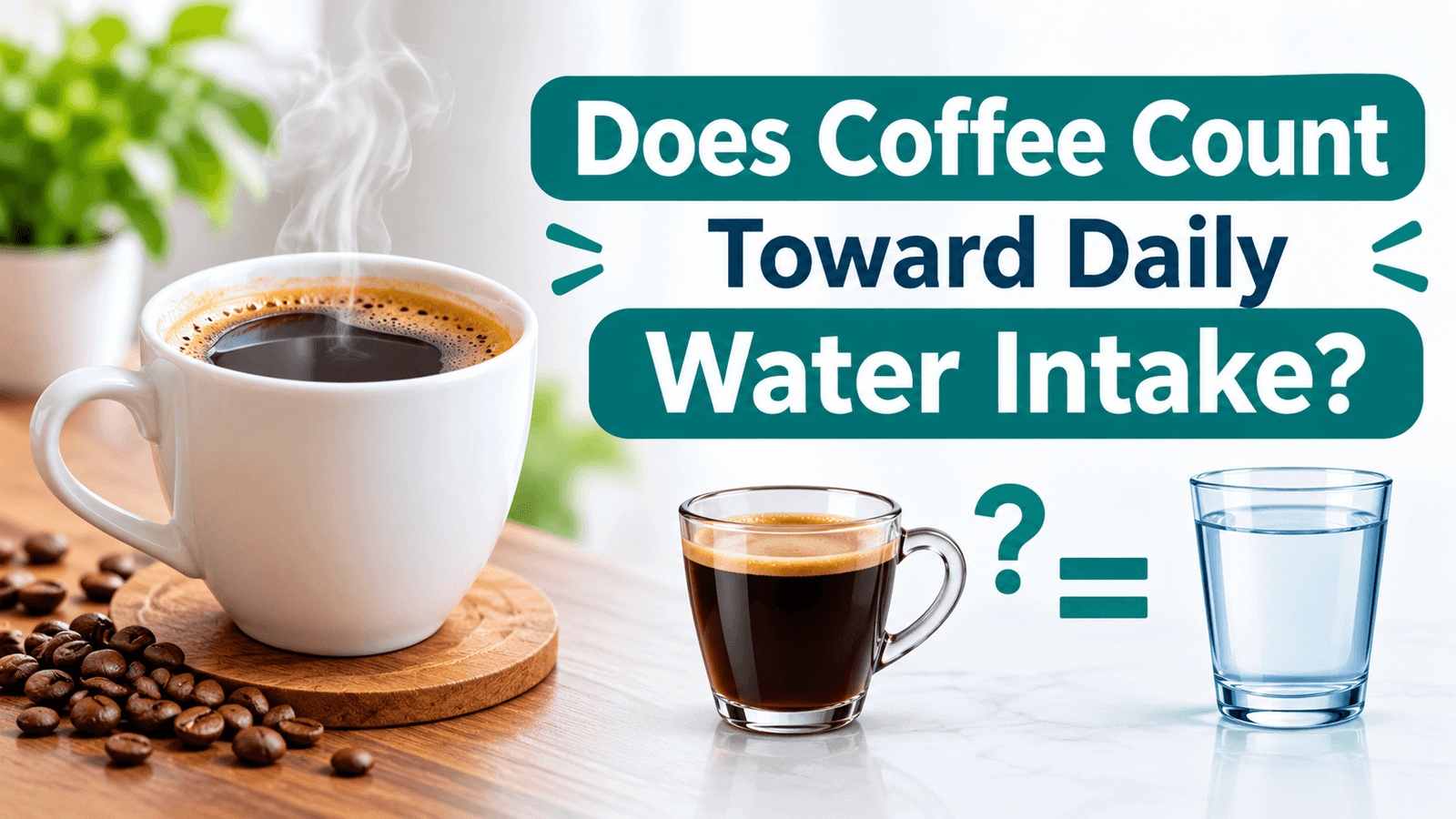
A mug of coffee is easy to file under "habit" and leave out of a fluid tally. On this site the mug stays in the tally. The liquid in the cup is part of the day's drinks. The useful step is to measure that liquid and see what share of a personal target it already covers.
A standard home cup in the United States is 8 fluid ounces, about 237 ml. Three of those cups are about 710 ml. A coffee-shop cup marked 16 fluid ounces is two of those home cups, about 473 ml. Counting "coffees" by the number of trips to the counter misses the size. The ounces you finished are the ounces that count.
Three cups inside a 2.8 liter day
This site's sedentary baseline for a 70 kg man, in temperate weather and under age 65, is 70 times 40 ml. That product is 2,800 ml, or 2.8 liters. It is a drinking figure from our planning formula, not a total-water reference from the National Academies.
Place three 8 fl oz coffees inside that day:
- Coffee: 3 times 237 ml, about 710 ml.
- Remainder: 2,800 minus 710, which is 2,090 ml.
- That remainder is about 71 fl oz, a little more than four bottles of 500 ml.
Those four bottles are the plain-water side of the same 2.8 liters. The coffees are not a second assignment stacked on top. One 16 fl oz coffee plus one 8 fl oz coffee is also about 710 ml. The sum follows the ounces.
If that man also drinks a 12 fl oz glass of milk with breakfast, add about 355 ml to the coffee column and shrink the remainder again. The target stays 2,800 ml. Only the mix inside it changes.
What caffeine does to the count
Caffeine can raise urine output for a short stretch after the cup. For the amounts people usually drink, the cup still delivers more water than that brief rise removes. When the National Academies described adequate water intakes, beverages as a group included coffee and tea. Those drinks were not set aside as a fluid that has to be replaced, cup for cup, with a separate glass of water.
This page uses that as a fact about ordinary coffee and tea. It is not a promise that caffeine feels the same for every person, and it is not a suggestion to meet a whole day with a pot of coffee. Sleep, a racing heart, or a sour stomach can be reasons to cut caffeine while the milliliters, if you still drink the cup, continue to count.
A matching glass counts the cup twice
Some people drink a full glass of water beside every coffee, on the idea that the coffee has to be cancelled. On the 2,800 ml day above, three matching 8 fl oz glasses would be another 710 ml. The running total would be about 3.5 liters before lunch, and the coffees would have been counted twice: once as themselves, and once as the glasses poured "because of" them.
Drink water because 2,090 ml is still open, or because you are thirsty. Skip the matching glass as a rule. If the remainder is already gone and urine is pale, another forced glass is optional, not a correction for the coffee.
Tea, milk, and the larger cafe cup
An 8 fl oz cup of tea is about 237 ml whether the tea is black, green, or herbal. Herbal tea without caffeine is still the same volume. A latte is mostly milk. A 12 fl oz latte is about 355 ml, and the espresso in it is a small slice of that volume. Count the cup you finished. Milk belongs with the other drinks in a day's fluid total. The National Academies' description of beverages includes milk along with water, coffee, and tea.
Ice in a cold coffee adds water as it melts. A cup that is half ice is not a full cup of coffee. If you want a closer tally, count the liquid you can drink, not the line on the cup before the ice settles.
Sugary drinks fill the remainder poorly
A 12 fl oz cola is about 355 ml of fluid. A typical cola of that size also carries on the order of 35 to 40 grams of sugar. The fluid can sit in the 2,090 ml remainder from the example. The sugar is why that is a poor everyday way to finish the remainder. Public guidance from the CDC on healthier drinks points toward water for the ordinary share of the day. This site uses the same practical split: the soda counts as fluid, and plain water is the better default for the milliliters coffee did not cover.
Juice is the same pattern in a smaller glass. A 6 fl oz juice is about 177 ml of fluid with a concentrated dose of sugar. It can occupy a slot in the day. It is a weak choice for the whole remainder.
Coffee does not move the target
The cups change the mix. They do not change the formula. Activity, heat, and age still move the drinking number. A moderate day for the same 70 kg man multiplies the 2,800 ml baseline by 1.20 and lands at 3,360 ml. Three small coffees are then a smaller share of a larger day. The cups do not get a caffeine multiplier of their own.
Alcohol sits outside this example. This page does not give beer, wine, or spirits a fluid credit. Someone who has been told to limit fluids, and someone who feels unwell from caffeine, has a constraint the 710 ml arithmetic does not see. The volume of a cup can count while the caffeine is still a poor fit. Children under 14 are outside the tools on this site. Pregnancy and breastfeeding are not given a coffee allowance here.
For a drinking number that starts from your own weight, age, activity, and climate, use the water intake calculator. If you want the coffee share in milliliters, measure the cups you actually finished and set them beside that number. The guide is the method. The calculator is the personal figure.
Questions
Does a large latte count the same as a small black coffee?
Count the volume in the cup. A 16 fl oz latte is about 473 ml. An 8 fl oz black coffee is about 237 ml. The milk in the latte is fluid, so the larger cup covers more of the day's drinking target. The difference in caffeine does not change the milliliters.
Should I add a glass of water for every coffee?
On this site, no. The coffee already sits inside the day's drinking target. A matching glass for each cup counts that fluid a second time. Drink water for the part of the target the cups have not covered yet.
Does decaf count differently from regular coffee?
Count the same milliliters for a decaf cup and a regular cup of the same size. Decaf still contains a little caffeine, and the cup is almost entirely water. Choose decaf because of caffeine, not because the fluid total changes.
Sources
The reference point on this page is that ordinary coffee and tea were included among beverages when water intake references were set. The 2.8 liter baseline, the 40 ml per kilogram rate, and the cup arithmetic are this site's planning figures.
- National Academies, Dietary Reference Intakes for Water, Potassium, Sodium, Chloride, and Sulfate (2005), summary of water findings
- CDC, About Water and Healthier Drinks
- Harvard T.H. Chan School of Public Health, The Nutrition Source: Water