Urine Color, Thirst, and Drinking Enough Water
A moderate day for a 70 kg man comes out at 3.36 liters on this site. That figure is the plan. Urine color and thirst are how you check it.
Last updated November 18, 2026.
This page is an educational way to read thirst and urine color beside a drinking plan. It is not a diagnosis. Warning signs and people who should ignore the plan are on the health disclaimer.
The plan and the check are different tools
The 3.36 liter figure comes from this site's formula: a 70 kg man, a 40 ml per kilogram baseline, then a 1.20 factor for a moderate day, with temperate weather and age under 65. It is 3,360 ml rounded to two decimals in liters. It is a quantity to pour across the day. It cannot see your kidneys, your last meal, or a vitamin you took at breakfast.
Urine color and thirst can see the day you actually had. They are blunt. They are also available every time you visit a bathroom. Used together, the plan says what you set out to drink, and the color says whether that amount is landing near the mark. Neither one overrules a clinician's fluid limit.
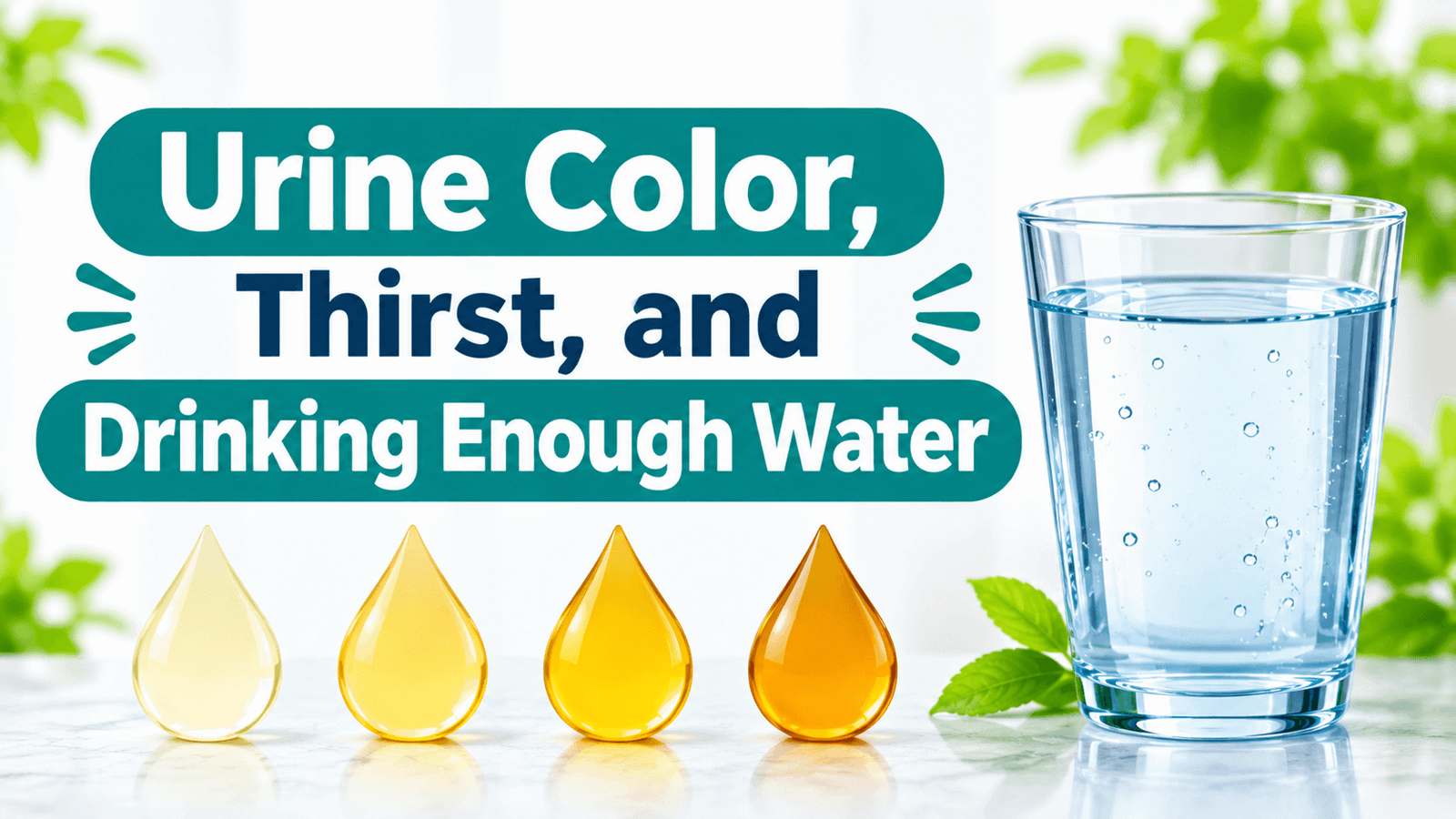
Three colors against the same 3.36 liters
Read the color of urine in the middle of the day, in a white bowl if you can, under ordinary indoor light. The first trip after waking is a poor sample for this table. Overnight is a long stretch without a drink, so that sample runs darker for people who are otherwise fine.
| What you see | Beside a 3.36 liter plan | A practical next step |
|---|---|---|
| Dark yellow, and often strong-smelling | The day is running behind the plan, or something else is coloring the sample | Drink the next portion sooner, unless a clinician has capped your fluids |
| Pale yellow, like lemonade | The plan and the day are close | Keep the remaining bottles on their usual pace |
| Colorless for most of the afternoon | You are likely ahead of thirst, even if the 3.36 liters is not finished | Stop forcing the last of the plan |
Pale yellow does not certify that the bottle total hit 3.36 liters. You can look pale a little under that figure or a little over it. Colorless urine at 2.5 liters means the last 0.86 liters is optional. Dark urine at 3.36 liters means the figure was not enough for that day, or that color is coming from somewhere besides fluid. The table is a nudge. It is not a lab.
Thirst still gets a vote
Thirst is the body's own request for fluid. A plan that you finish while you have no thirst and colorless urine has become a quota. A plan you ignore while your mouth is dry and the sample is dark has become a decoration. On an ordinary day, occasional thirst plus pale yellow is the pair this site treats as "close enough."
Thirst can lag. A busy afternoon, a long meeting, or a cold room can quiet the signal until the sample is already dark. That is a reason to keep the plan in sight, not a reason to throw thirst out. After age 65 the lag is more common, which is why this site applies a small age factor then. The check on this page stays the same: look at the color, notice whether you are thirsty, and adjust the next glass.
Dry mouth, a headache, and darker urine can travel together when fluid is behind. They also travel with poor sleep, skipped meals, and illness. One afternoon of all three is a reason to drink the next portion and pay attention. The same trio every day, or any of them with confusion or fainting, belongs with a clinician.
Color that fluid did not cause
B vitamins can turn urine a bright yellow that looks "dehydrated" next to a pale-yellow target. Beets and some blackberries can tint it pink or red. A few medicines change color as well. If you started a supplement and the sample changed the same day, while thirst and energy did not, hold the extra liters. Forcing the rest of a 3.36 liter plan to chase a vitamin color only makes the afternoon colorless.
Food dyes and a heavy asparagus meal change smell more than they change the decision. Smell alone, without a dark color, is a weak signal. Blood in the urine, urine that looks like cola for hours, or pain with urination is not a hydration clue. Those need medical care, whatever the day's bottle count was.
Finishing the plan can be the wrong move
The risky pattern is mechanical. The plan says 3.36 liters, the urine has been colorless since lunch, thirst is absent, and the last bottle gets finished because the number is still open. Water drunk past thirst, especially in a short window, can dilute sodium. Endurance sessions make that worse because sweat has already spent sodium. This page's rule for that pattern is simple: close the bottle. The unused milliliters are not a failure.
The opposite pattern is also real. Someone matches 3.36 liters, trains in the heat, and stays dark yellow into the evening. The plan was the moderate-day figure, and the session outran it. Raise the next similar day, or replace the sweat on its own, instead of deciding that pale yellow is impossible.
Get urgent care for confusion, a seizure, fainting, chest pain, trouble breathing, an inability to keep fluids down, or very little urine. A sudden severe headache, repeated vomiting, or a bad headache with swelling during heavy drinking also needs urgent care. Those signs are listed so you do not try to interpret them with a color chart. The full caution is on the health disclaimer.
Using the check with your own number
The 3.36 liters is one worked day, not a universal assignment. Your plan might be 2.1 liters or 4 liters, depending on weight, activity, and heat. The colors mean the same thing beside any of those figures: dark suggests you are behind, pale yellow suggests you are close, colorless all afternoon suggests you can stop pushing. The water intake calculator is where the personal figure comes from. This guide is the check you run after you have one.
Children under 14 are outside that calculator. People with kidney disease, heart failure, liver disease, or a history of low sodium should follow the fluid plan they were given. A pale-yellow target does not replace it.
Questions
If my urine is pale yellow, have I finished a 3.36 liter plan?
Pale yellow means the day is close. It does not prove the bottle total hit 3.36 liters. You can look pale yellow a little under or a little over that figure. Use the color to decide whether the next glass is useful, and use the plan as the amount you were aiming near.
Why is the first urine of the morning darker?
The night is a long gap without drinking, so morning urine is often the darkest of the day. Judge the day from later trips, after you have been awake and drinking, not from that first one alone.
Can urine be dark when drinking is not the cause?
Yes. B vitamins, beets, some medicines, and illness can change color. A single dark sample with normal thirst is a weak reason to force extra liters. Dark urine that continues, or that arrives with pain, fever, or almost no urine, needs a clinician rather than another bottle.
Sources
The 3.36 liter day is this site's moderate-activity example. Public pages from the CDC and Harvard discuss water, thirst, and the harms of getting too far behind on fluid. They are the backdrop. The three-row reading and the decision to stop when urine stays colorless are this site's practical check.
- CDC, About Water and Healthier Drinks
- Harvard T.H. Chan School of Public Health, The Nutrition Source: Water
- National Academies, Dietary Reference Intakes for Water, Potassium, Sodium, Chloride, and Sulfate (2005), summary of water findings